Computer Security and Compliance
For Information Networks of All Sizes:
Horizon3.ai NodeZero Threat Assessment Experts
 NodeZero from Horizon3.ai is a cutting-edge penetration test (pentest) product family that supports continuous, concurrent, automated assessment of your network so you can expose, prioritize, remediate, and verify cybersecurity vulnerabilities before malicious hackers can exploit them. Pentests permit you to operate proactively to block attackers from hijacking data, disrupting productivity, or causing financial or reputational damage. (For information about pentesting, visit Progent's penetration testing services.)
NodeZero's Breach and Attack Simulation tools can use the latest hacking methods by relentlessly pivoting through your network and chaining together discovered weaknesses until a clear attack vector is exposed. NodeZero then benignly exploits the security gap as evidence of the weakness, assesses and ranks the potential damage that could be caused by a true malicious exploit, documents the issue, and provides AI-powered advice for remediation. NodeZero's reports highlight systemic weaknesses where implementing a single fix can be leveraged to block multiple attack paths. Once you have removed the reported security issues, you can run NodeZero's 1-click validation feature to confirm remediation actions worked. NodeZero can also produce compliance reports mandated for SOC2, HIPAA, GDPR, and other common compliance standards.
Progent can provide the guidance of a NodeZero Certified Operator (NCO) to help you to design and carry out comprehensive penetration tests of your network perimeter and your internal IT infrastructure in order to realistically evaluate your current cybersecurity profile. Progent can help you to configure and launch NodeZero pentests customized for your network environment, understand NodeZero reports, and fix vulnerabilities based on their potential impact on your network. Progent can also help you to develop a cohesive cybersecurity strategy that streamlines management and delivers optimum protection for on-prem, cloud-based, and perimeter network resources.
Internal and External Pentests
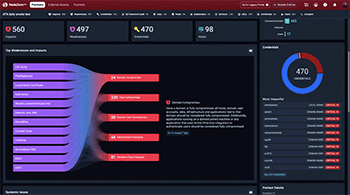
Internal penetration tests with NodeZero proceed as though your network perimeter has been compromised and run a pentest of your internal infrastructure to find what security vulnerabilities may exist that expose your network to serious compromise. To assist you to organize your remediation work, the NodeZero dashboard shows which internal vulnerabilities could cause the most havoc to your organization and which ones allow the most attack chains. External penetration testing with NodeZero is cloud-hosted and deploys the latest hacker techniques to breach your network perimeter.
Common Vulnerabilities that Penetration Testing Can Help Detect and Fix
Malicious actors tirelessly check IT environments for weaknesses by using an expanding arsenal of utilities and techniques. While there are many different types of security flaws, here are some of the most frequently encountered attack vectors hackers try to exploit:
- Apps that have not had current revisions and security patches installed
- Code injection problems that permit hackers to insert code or queries in a web app that fools the application into executing malicious instructions or permitting control of important resources
- Zero-day weaknesses in software that neither the target organization nor the software vendor know about yet and consequently have not had a chance to create a solution
- Authentication issues that make it easier to get inside a system or masquerade as a valid user
- Configuration vulnerabilities that cause gaps in security systems like opening unsafe ports or leaving cloud storage buckets exposed to anyone with the correct address
- Unpatched OS security gaps
- EOL products for which cybersecurity patches have stopped being developed
- SQL Injection (SQLI)
- Easy-to-guess account credentials
- Cross-Site Scripting (XSS)
- Insecure Direct Object References
- Device misconfigurations
- Unpurged stale objects
- Open systems access
- Outdated methodology cybersecurity deployments rather than modern best practices
- Failure to implement out-of-band two-factor authentication (2FA secured communications (example: Man In The Middle Attacks)
Horizon3 regularly introduces services to the NodeZero testing platform so you can keep ahead of increasingly cunning attackers. Advanced NodeZero testing services include:
- Phishing Impact Testing: Learn the amount of damage that could be done by a cybercriminal using phished credentials and recommend efficient and effective remediation.
- PCI-DSS Compliance Testing: Run detailed testing and reporting to demonstrate adherence to the PCI Data Security Standard (DSS). Compliance reports can be shared with auditors.
- Trip Wires: Intelligently deploy honeypots that allow you to react rapidly to indications of active attacks in sensitive parts of your environment.
- Kubernetes Testing: Pentest Kubernetes clusters, uncovering issues such as container escapes, RBAC misconfigurations, and hidden exposures.
- Cloud Pentesting: Expose identity and access management (IAM) weak points and misconfigurations in Amazon Web Services (AWS), Azure/Entra, and Kubernetes.
- Rapid Response: Quickly react to emerging threats before they have time to cause serious damage.
- Insider Threat Attack: Determine the extent of damage a hostile insider could cause.
- Segmentation Pentesting: Expose your internal threat surface like IPs, ports, services and apps prior to running simulated exploits.
- Active Directory Password Audit: Expose gaps in your Active Directory password policy, optimize remediation, and produce a prioritized report of high risk accounts.
Advantages of Progent's Penetration Testing Services
Progent offers low-cost external pentesting services on a one-time or ongoing basis. NodeZero's autonomous testing technology offers fast results and provides a comprehensive assessment of your outward facing cybersecurity profile. These "ethical hacking" services can provide a multitude of benefits.
- Meet Requirements of Cyber Insurance Companies: For many cyber insurance providers, periodic pentest is needed to obtain or retain coverage.
- Uncover Perimeter Vulnerabilities: External pentests help organizations discover vulnerabilities in their external-facing systems, such as websites, servers, and network devices.
- Realistic Attack Scenarios: Penetration tests play out real-world attack scenarios, giving organizations a better understanding of their susceptibility to various security threats.
- Compliance Mandates: Many regulatory standards (e.g., PCI DSS, HIPAA, GDPR) mandate regular security evaluations, including external penetration tests. Ignoring these requirements can result in legal and financial consequences.
- Risk Mitigation: Exposing and fixing security gaps early can reduce the risk of data theft, economic losses, and reputational damage.
- Vendor Checkups: Organizations can use external pentests to assess the cybersecurity of vendors, verifying that these stakeholders do not introduce vulnerabilities into your organization's supply chain.
- Better Incident Response: A pentest can assist companies fine-tune their incident response processes by exposing shortcomings in their ability to discover and react to security incidents.
- Security Consciousness: Conducting pentests can raise awareness among employees about the urgency of cybersecurity. It can also help educate them on safe operational practices.
- Build a Security Baseline Assessment: A pentest can establish a baseline for cybersecurity, enabling companies to compare the efficacy of cybersecurity improvements over time.
- Competitive Advantage: Demonstrating a commitment to cybersecurity through periodic penetration testing can help you gain business advantage, indicating to clients and partners that their information is protected.
- Security Investment Justification: Penetration test results offer tangible proof of the need for increased spending in cybersecurity initiatives and products.
- Internal Policy Validation: Organizations can assess whether their internal cybersecurity policies are successful in thwarting external threats.
- Reducing Attack Surface: By uncovering and fixing weaknesses exposed by a penetration test, companies can reduce their attack surface area and make it harder for hackers to break into their networks.
- Attack Simulation: Companies can simulate targeted attacks, permitting their security groups to practice dealing with realistic threats in a safe environment.
- Continuous Improvement: Regular external pentests help organizations follow their cybersecurity enhancements in a fast-evolving threat landscape, ensuring that they remain prepared for the newest threats.
- Legal and Regulatory Cover: In the event of a cybersecurity break in, being able to produce documented evidence of periodic penetration testing activity can offer a degree of legal and regulatory cover by demonstrating due diligence in cybersecurity.
To download a datasheet describing the features and benefits of Progent's NodeZero Pentesting Services, select:
Progent NodeZero Pentesting Expertise Datasheet. (PDF - 522 KB)
Contact Progent for Pentest Consulting
For more information about Progent's services for NodeZero-based pentesting, call Progent at
Ransomware 24x7 Hot Line: Call 800-462-8800
Progent's Ransomware 24x7 Hot Line is designed to assist you to complete the urgent first steps in mitigating a ransomware assault by containing the malware. Progent's remote ransomware expert can assist businesses to locate and quarantine infected servers and endpoints and protect clean assets from being compromised. If your system has been breached by any version of ransomware, don't panic. Get immediate help by calling Progent's Ransomware Hot Line at 800-462-8800. For details, visit Progent's Ransomware 24x7 Hot Line.
Select Topic: